
European Parliament roundtable highlights corporate influence over regulations
…and how far the GM industry will go to push its interests
As the deregulation of GMOs looms in Europe, GM Freeze’s Leonie Nimmo reports on a timely meeting
Crises are apparent everywhere we look––from the environment, to public health, to living standards. It’s good to take a step back and see the cross-cutting issues that underpin these multiple crises. Corporate capture of the regulatory process, where companies exert undue influence over policy-makers, results in regulations that are not in the public interest. It is responsible for much damage. In this process, “science” is used to justify policy decisions that favour corporations, and this science often originates with the very corporations it favours. Science can also shield policy-makers from the consequences of bad decisions, thwarting accountability mechanisms.
It was an honour, says Leonie, to join the esteemed company of the European Network of Scientists for Social and Environmental Responsibility (ENSSER) at the European Parliament to discuss the recommendations of the 2025 conference Science and policy in times of multicrisis and dissent.
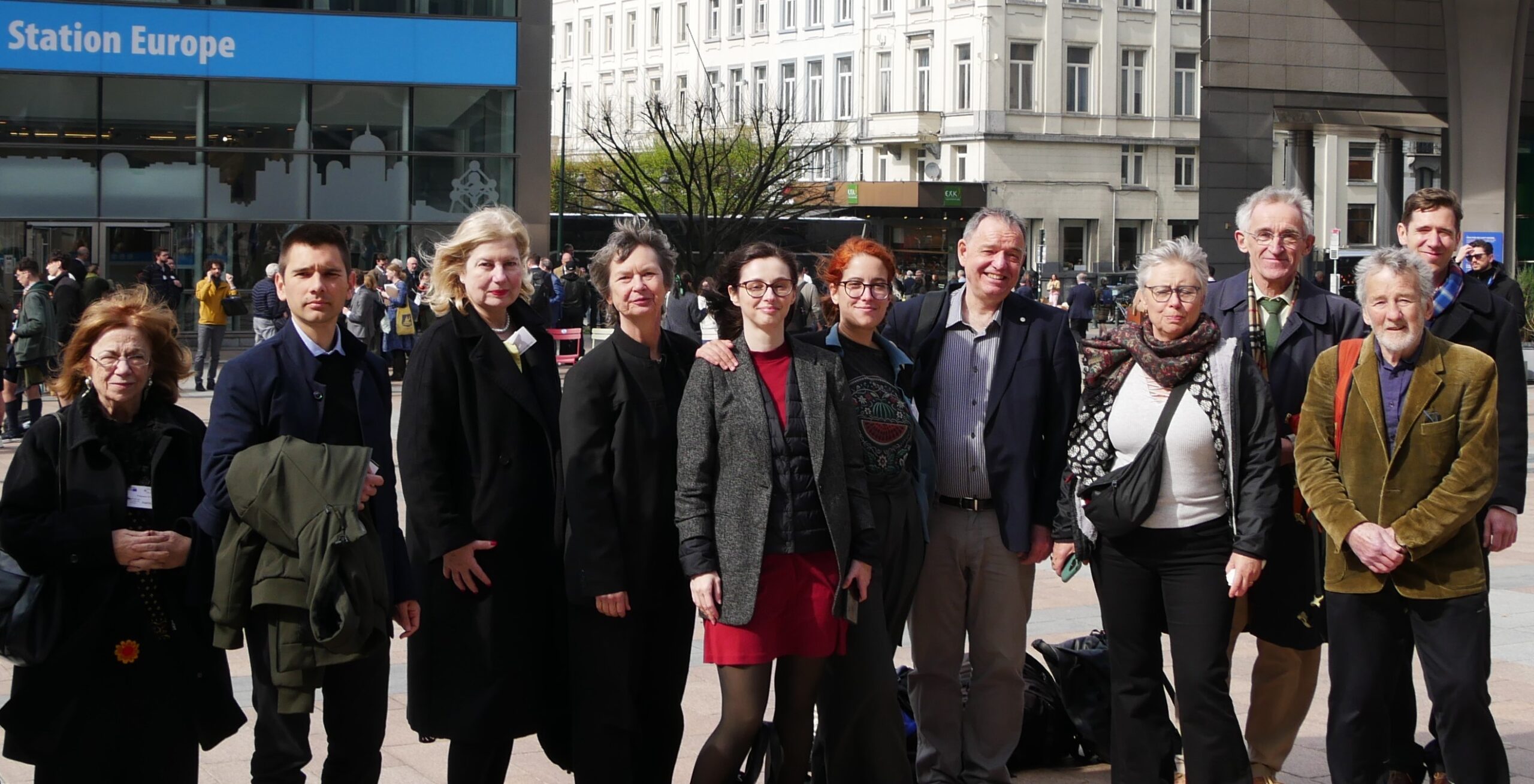
ENSSER members outside the European Parliament, 24th March 2026
As the deregulation of genetically modified plants looms on the horizon in Europe, with the deregulation of GM micro-organisms set to follow, it was a timely moment to engage politicians and policy-makers, and to highlight the deep flaws in the current system.
Armed with the ENSSER Science and policy conference report, we reminded key people in the Brussels superstructure that people are watching––and scientists, whose work is genuinely in the public interest, are watching too. At both an organisational level and at member level, ENSSER does the heavy lifting in analysing what goes on at the nexus of science and policy.
The brilliant Professor Erik Millstone set the scene with his Co-Dynamic Model, showing the bidirectional links between science and policy. He shared a slide that spoke volumes: In 2013 the European Food Safety Authority interpreted the reliability of studies into the toxicity of the controversial food sweetener aspartame. Of 81 studies reviewed that did not indicate possible harm, EFSA treated 19 as unreliable. Of 73 studies that indicated possible harm, EFSA treated all 73 as unreliable. The EFSA review did not close the debate, which remains one of contention. In 2023, the World Health Organization’s International Agency for Research on Cancer (IARC) classified aspartame as possibly carcinogenic to humans, pointing to the need for further research.
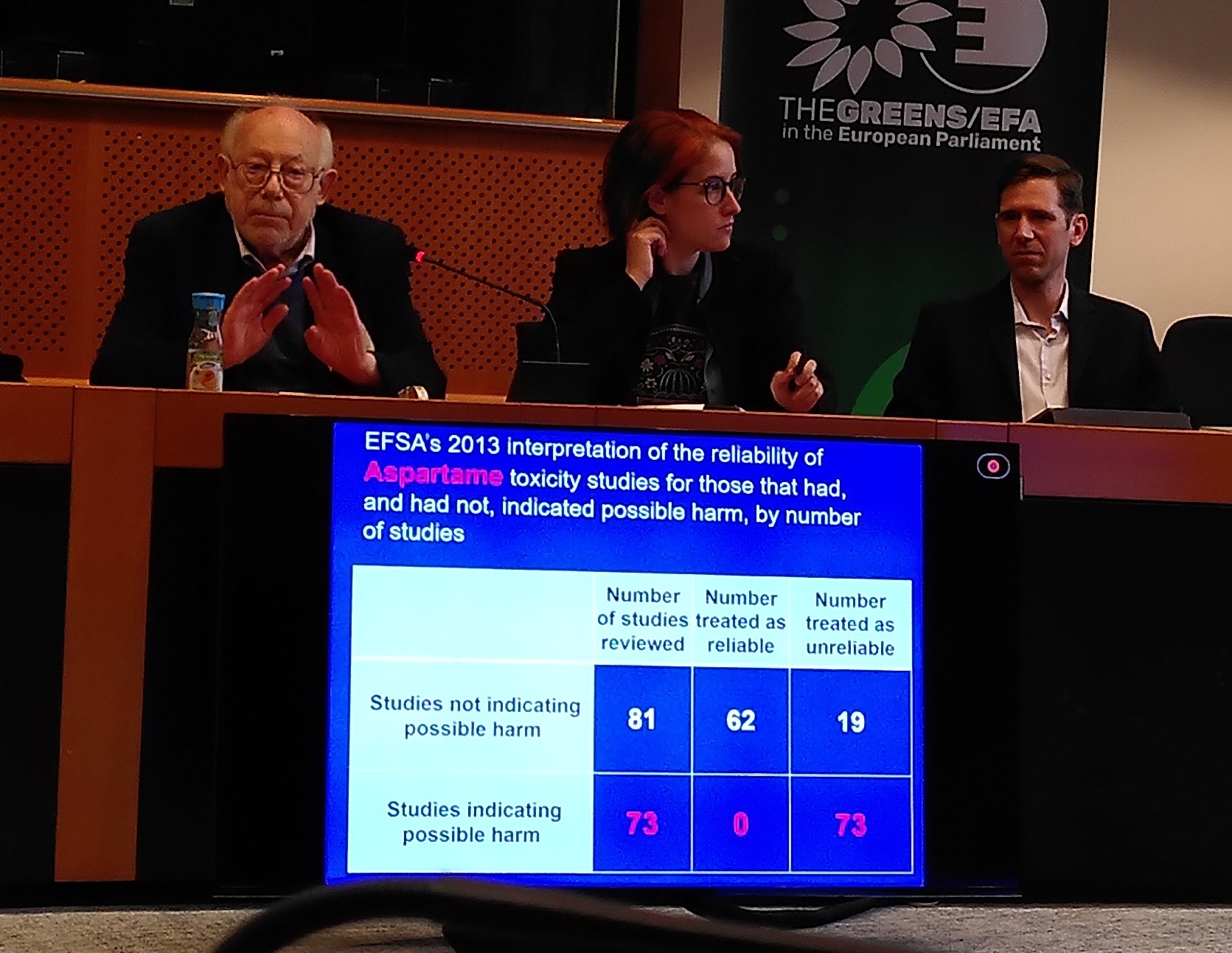
Professor Erik Millstone presents his Co-Dynamic Model
Next was Dr Irina Castro of the University of Coimbra, who spotlighted an apparently clear case of fraudulent science involving the GM company Monsanto (now Bayer). In 2000, the journal Regulatory Toxicology and Pharmacology published a study on the human health risks of Monsanto’s herbicide Roundup and its active ingredient, glyphosate—the substance that most GM plants have been genetically engineered to be resistant to. The study found no risks to health, and regulators around the world allowed the widespread use of the herbicide, citing the study as proof of its safety. It “sat for decades as evidence of lack of harm,” Irina told the meeting.
Twenty-five years later, in December 2025, the journal retracted the study, referring to concerns regarding the paper’s authorship, the validity of the findings, undisclosed financial contributions paid to the authors by Monsanto, and potential conflicts of interest of the authors.
These issues came to light as a result of the 125,000 lawsuits the company has faced in the USA from users of the herbicide who have developed cancers. Bayer has paid out more than $10 billion to settle approximately 100,000 Roundup claims but continues to sell the product.
According to Irina, the warning signs about the study had long been there. Many scientists had criticised it, but they were marginalised, suppressed and faced efforts to discredit their work. She highlighted the lack of accountability mechanisms for when regulatory decisions are based on flawed science. The retraction of the paper has not led to a review of the way glyphosate is regulated around the globe.
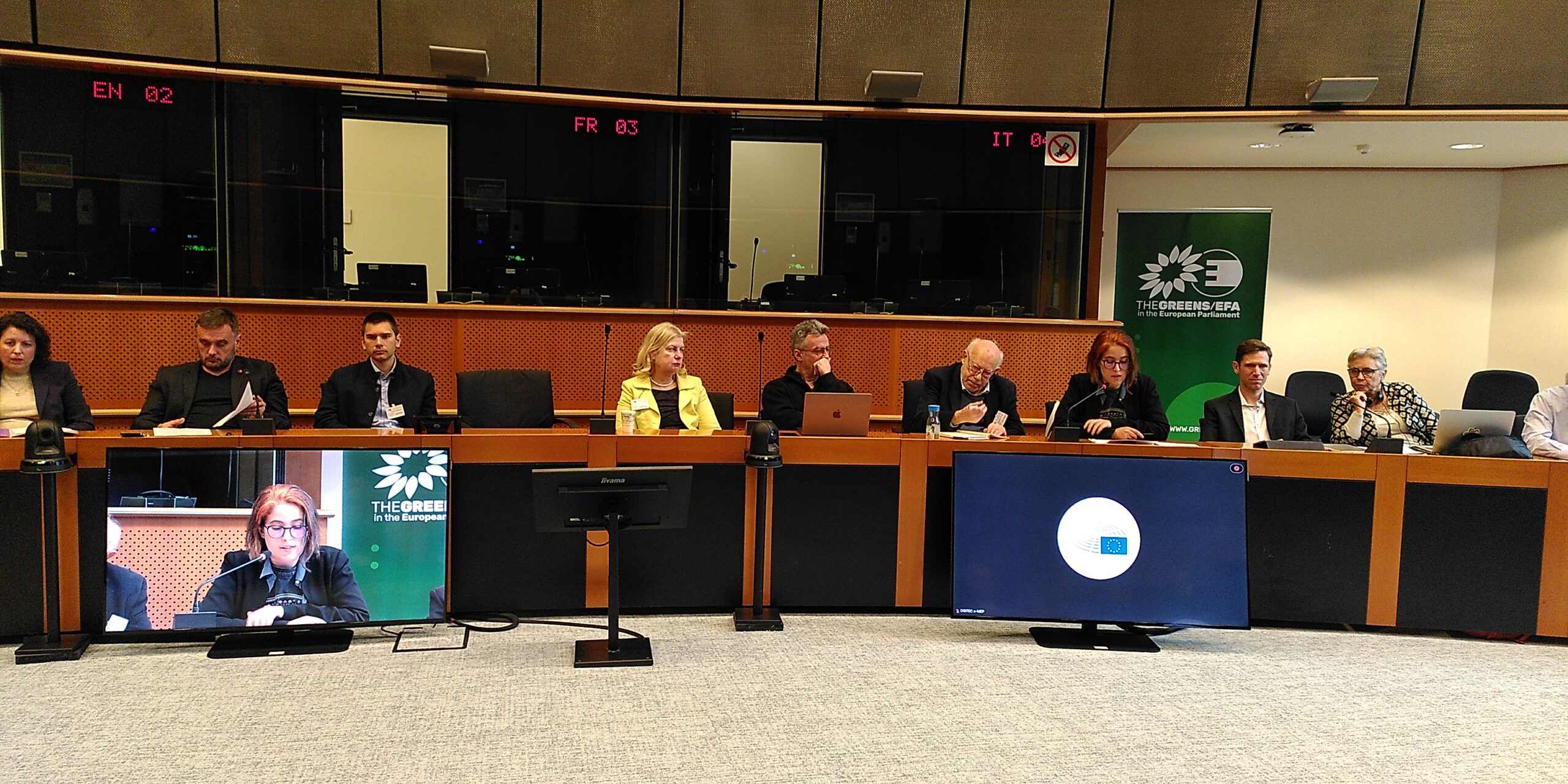
Dr Irina Castro highlights Monsanto’s manipulation of a key study into the safety of its herbicide glyphosate
We also heard insights from:
- Prof. Polyxeni Nicolopoulou-Stamati, chair of ENSSER
- Dr Ephraim Pörtner, Critical Scientists Switzerland
- Prof. Christos Zerefos, Mariolopoulos-Kanaginis Foundation
- Prof. András Székács, Hungarian Society of Ecotoxicology
- Glen Millot, Sciences Citoyennes, France
- Dr Angeliki Lysimachou, Head of Science and Policy, Pesticide Action Network Europe
- Dr Andrea Beste, Institute for Soil Conservation & Sustainable Agriculture, Germany
- David Gee, (retired), formerly European Environment Agency and Associate Fellow at Brunel University, London
- Hans van Scharen, Corporate Europe Observatory
David Gee bought the room’s attention to the European Environment Agency reports Late lessons from early warnings, which illustrate the damaging environmental and health impacts of ignoring evidence of potential hazards. Acting in accordance with the Precautionary Principle stimulates innovation rather than stifling it, argued David. He called for independent, ‘anticipatory’ research, evaluations of policy effectiveness and transparency in scientific evaluations.
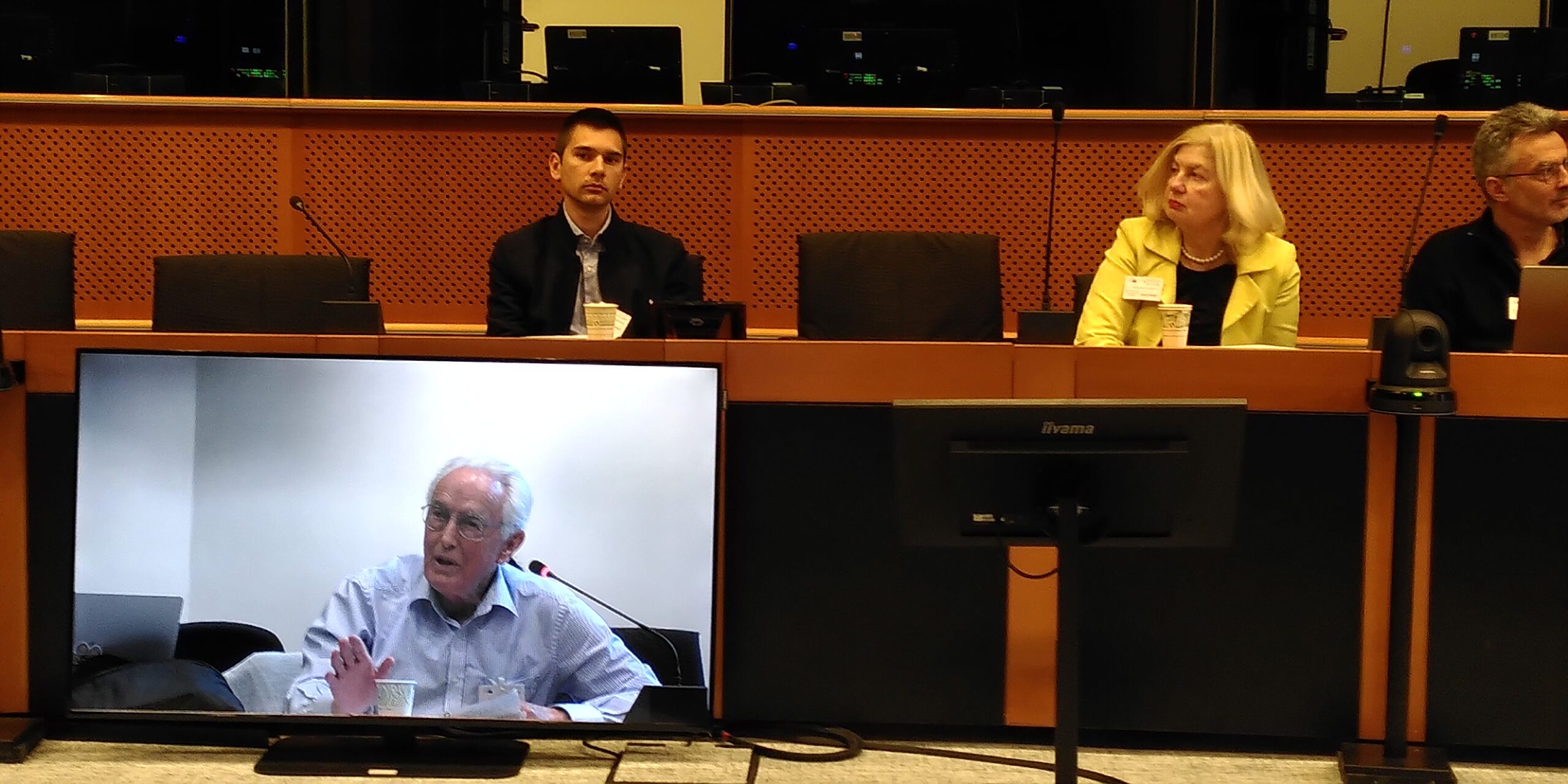
David Gee highlights Late Lessons from Early Warnings report
Hans van Scharen shared a new briefing by the Corporate Europe Observatory (CEO) and the Center for International Environmental Law, The Pollution Playbook: How Industry Blocks Regulation of Toxic Chemicals. “25 years ago, we studied lobbying and how corporations influence European decision-making, but these days we don’t talk about lobbying,” he explained. “We should talk about corporate capture. Access is direct and uncomplicated: industry tells the [European] Commission what to do.”
From the European Parliament and European Commission, we heard from:
- Martin Häusling, MEP for the Greens/European Free Alliance and co-host of the meeting
- Michal Wiezik, MEP for the Renew Group
- Manuela Ripa, MEP for the European People’s Party Group
- Luis Vivas-Alegre, Head of Sector, Research and Innovation Unit, DG Agriculture and Rural Development, European Commission
- Alexandra Vakrou, Head of Unit ENV.A.3 – Green Knowledge & Research Hub, LIFE, DG Environment, European Commission
- Klaus Berend, Director for Food Safety, Sustainability, and Innovation, DG Health and Food Safety, European Commission
- Prof. Jim Dratwa, Head of the European Group on Ethics in Science and New Technologies Office, European Commission
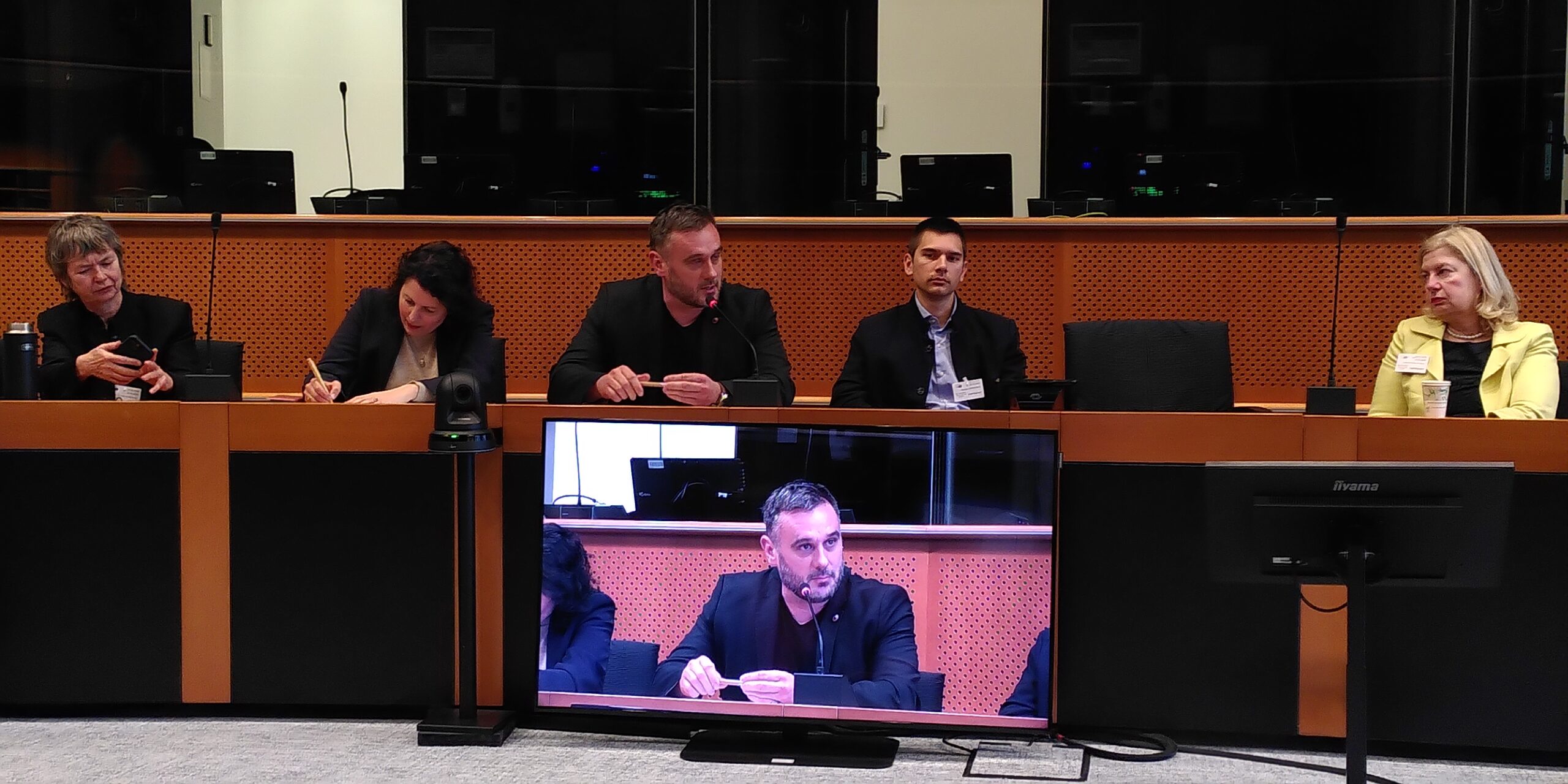
Michal Wiezik, MEP for the Renew Group, makes a contribution.
The meeting was chaired by ENSSER members Dr Angelika Hilbeck, retired from the Institute of Swiss Federal Institute of Technology, and Diederick Sprangers, Scientific Coordinator of ENSSER.
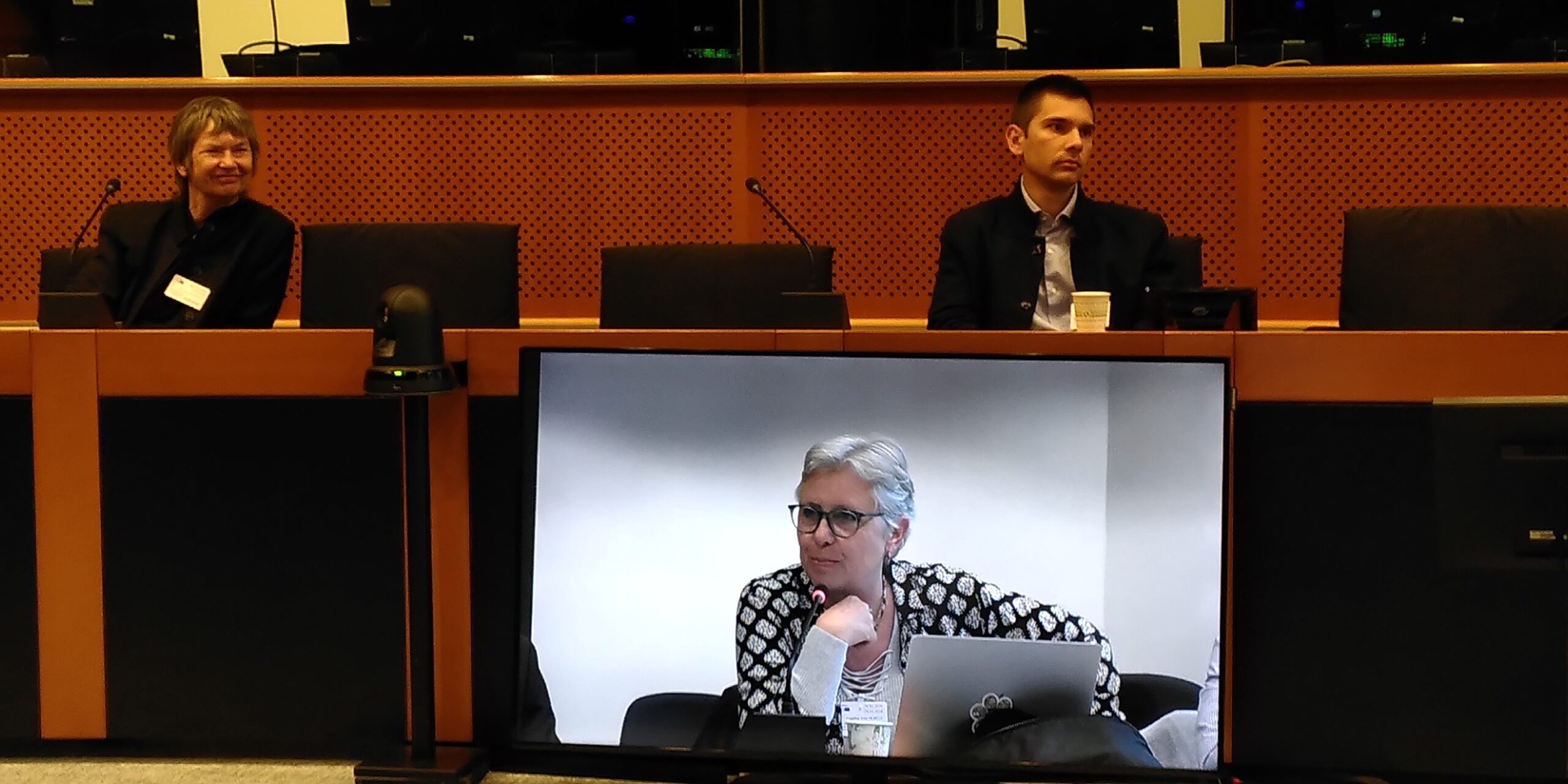
Dr Angelika Hilbeck chaired the discussion
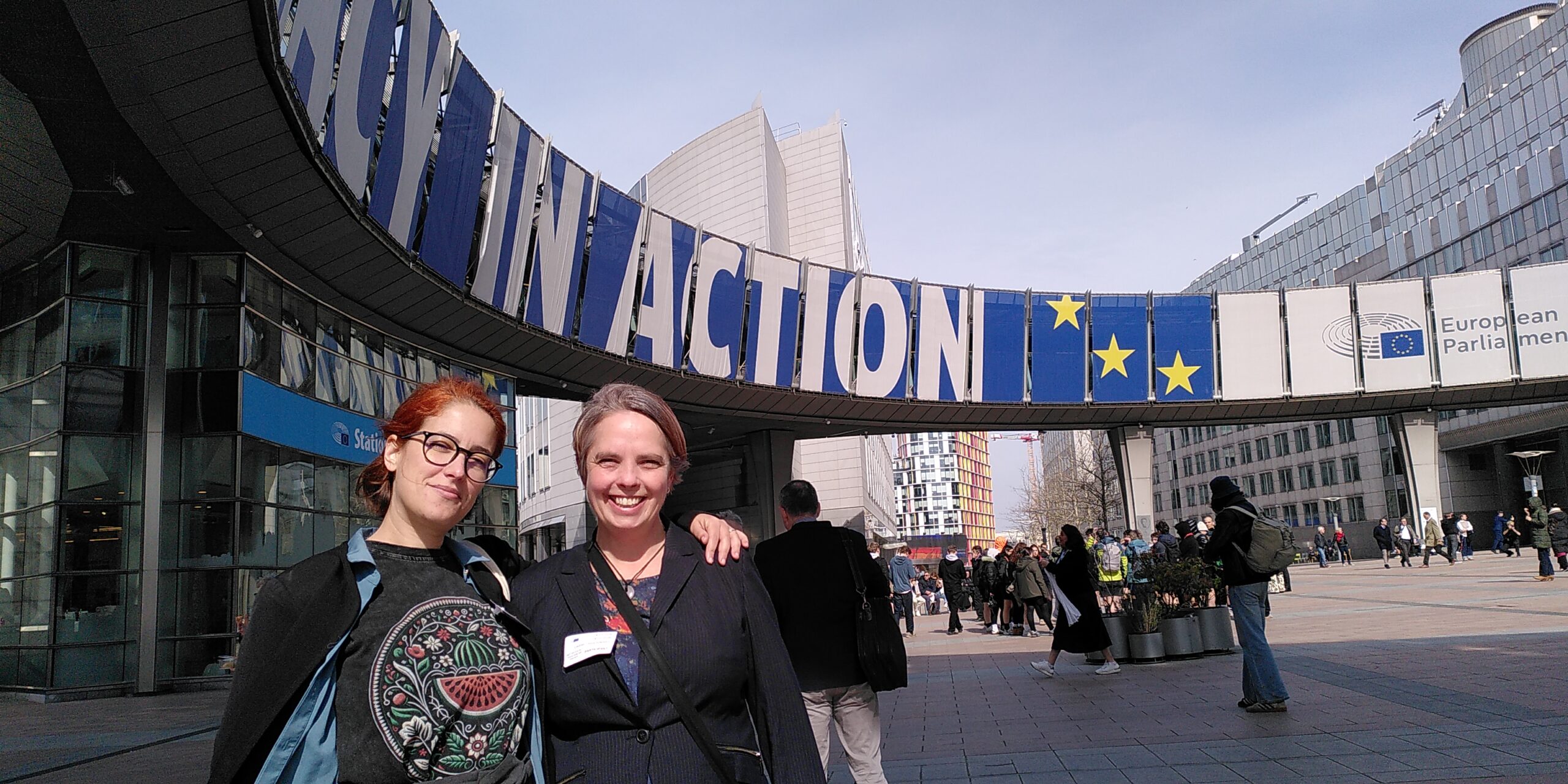
GM Freeze’s Leonie Nimmo with Dr Irina Castro

View from the top


