
Powers of deception: GMOs by any other name
As the Food Standards Agency considers working with the Science Media Centre to raise awareness about new GMOs—so-called Precision Bred Organisms—we examine what really concerns the public about science, and why these GMOs are not what they say on the tin.
For a full analysis of why it would be inappropriate for the FSA to engage the Science Media Centre, see our report: The Science Media Centre, the Food Standards Agency and how to undermine trust in the food system.
GM Freeze is grateful to Professor Brian Wynne for his extensive input into this article. Prof. Wynne was a special advisor to the 2000 Inquiry and Report into Science and Society, led by the House of Lords Select Committee on Science and Technology. It was this report that led to the creation of the Science Media Centre (SMC) two years later.
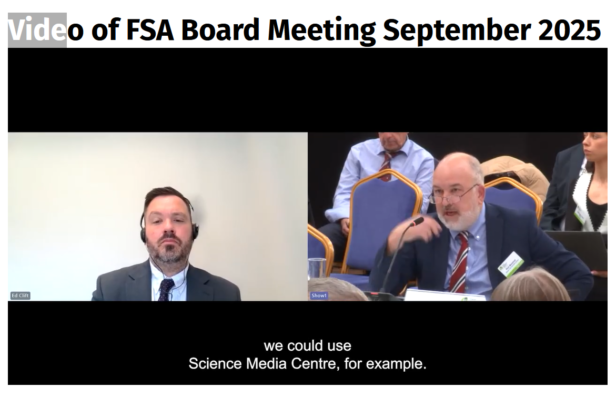
Rick Mumford reveals that the FSA is considering partnering with the SMC to raise awareness about new GMOs. Image credit: www.food.gov.uk
Perceptions of the public
It is often claimed that ordinary people are only concerned about risks when it comes to technologies such as GMOs, and that these worries stem from a misunderstanding or ignorance of the science. This presumption—the ‘public deficit model’—takes the stance that opposition or scepticism is due to a lack of scientific knowledge or an anti-science stance. The model reduces concerns to technical disputes over risk and discredits people’s legitimate knowledge and opposition.
The public deficit model has been repeatedly reinforced by scientists, policy officials, politicians, corporate actors and media intermediaries such as the SMC. In November 2023, the SMC hosted a panel event on ultra-processed foods. Its senior press manager, Fiona Lethbridge, said that the aim of the event was to correct “some of the more dogmatic claims about harms of UPFs being made by people without a background in food science”. The event proved controversial because of links between the scientists on the panel and the fast-food industry.

Ultra-processed foods often take up prime space in supermarkets. Image credit: Sandra Cohen-Rose and Colin Rose from Montreal, Canada, CC BY 2.0, via Wikimedia Commons
In 2001, the European Commission funded qualitative research into public perceptions of agricultural biotechnologies (GMOs) in five EU member states. Prof. Wynne and others found public responses were very different from those assumed by many experts. Rather than simple ignorance, concerns tended to cluster around mistrust of the institutions providing assurances and of the processes used. This mistrust was not based on ignorance but on experience of previous crises, such as the handling of the cattle disease BSE.
According to the report:
From their own personal experience of human fallibility and previous institutional failures, they felt that lack of rigour, corruption, fraud and lack of resources was nothing unusual within control authorities. Moreover, the focus group participants did not believe that decision-makers had learned from the BSE fiasco, in order to reform their ways. They therefore naturally considered that the same kinds of behaviour—and mistakes—could be expected with respect to GMOs.”
Participants raised questions about the necessity or otherwise of GMOs, and about who makes decisions about their development. In all countries, there were participants who considered there to be an “alternative to hyper- technology and hyper-industrialisation of food production systems”. This alternative would require a paradigm shift, involving more connection to the natural environment and more equitable distribution of profits.
The science of unsustainable agriculture
People’s concerns often relate not to technical claims about hazards but to the broader context in which science operates. The science presented to the public frequently comes from corporations, or institutions biased by conflicts of interest. There may be alignment or direct support from global agrochemical and biotechnology corporations, with products designed to capitalise from intellectual property regimes.
Increasingly, mega-corporations from other sectors—such as computing, AI and remote sensing—are moving into the agricultural biotechnology space. There are significant implications for environmental sustainability, food security and sovereignty, and social justice.
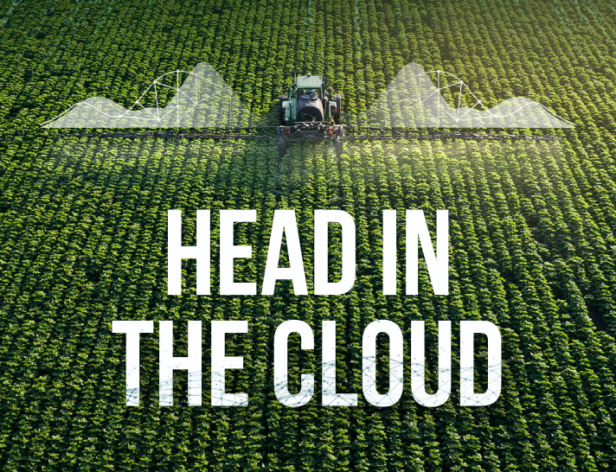
Head in the cloud, a Feb 26 publication from IPES-Food, challenges the false promise of digital agriculture.
The activities of corporations have, over decades, undermined policy commitments to sustainability goals. Many people understand this, but the public deficit model ignores such concerns. Explaining away opposition by blaming it on ignorance can serve to obscure the fact that ‘“science’” may function as an instrument of corporate self-interest.
The institutional bias of profit-making entities is also visible in academia: research that supports precautionary approaches or low-input agriculture receives only a fraction of the resources devoted to agricultural biotechnology. As a result, outcomes may benefit research institutions and corporations but be less advantageous for farmers, ecosystems and society, with environmental and socio-economic costs inadequately considered.
Funding priorities also skew research toward short-term higher yields, profits and patents. This means less attention is paid to proven alternatives such as organic or agroecology, which entail lower artificial inputs, offer better nutritional value, provide greater long-term sustainability, and come with far fewer risks than technofixes such as genetic engineering.
Breeding misconceptions of “precision breeding”
The public deficit model’s blinding effects become particularly worrying when combined with the obfuscation that has already occurred around so-called “precision breeding”. The term itself is misleading: precision breeding is neither inherently precise and nor is it breeding.
The phrase seems to have first appeared in an obscure plant science journal published in Srinigar, India, in April 2020. Two years later the British government adopted it in primary legislation—the Genetic Technology (Precision Breeding) Bill (now Act). By November 2022, more than 100 international scientists and policy experts had signed a statement opposing the use of the term on the grounds that it was “technically and scientifically inaccurate and therefore misleads Parliament, regulators, and the public”.
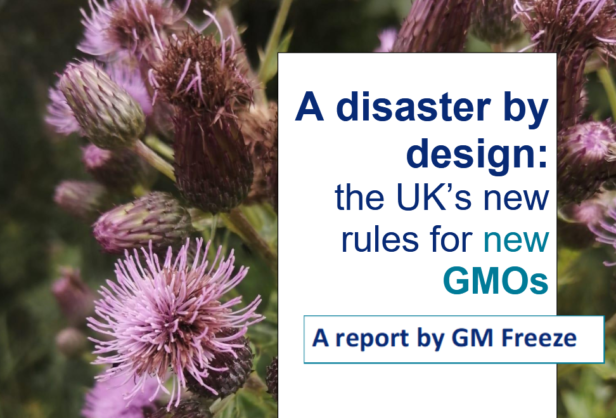
The GM Freeze report A disaster by design examines the many problems with the UK’s new system for new GMOs.
Educational efforts about the “science” of precision breeding are immediately hampered because the term lacks a clear scientific definition. The legal definition is the creation of an organism that has had changes made to its genome using “modern biotechnology” (genetic engineering), and each change “could have resulted from traditional processes”. This is far from scientific: it creates a hypothesis that is impossible to test, and there is no analysis of probability. Both are central tenets of scientific enquiry.
An oft-cited but inaccurate definition is that the organism itself could have occurred through traditional breeding. In fact, though, the Act only requires that each change could have resulted from traditional processes. Furthermore:
- There is no consideration of the probability of the genetic changes happening, or indeed, the probability of all of the changes being made to one organism.
- There are no upper limits on the number of genetic changes that can be made.
- It doesn’t matter how many copies of the introduced gene there are, or where in the genome the change(s) has been created.
- The epigenetic status of the change—how it affects whether genes are activated in the organism—is not taken into account.
Regulators are supposed to ignore all these elements in determining whether or not an organism qualifies as “precision bred”. If it does, there will be no meaningful risk assessment, no traceability requirements and no labelling. According to Professor Michael Antoniou and Claire Robinson in a Scientific Critique for GMWatch, this is despite these elements being crucial in determining whether the modified organism is safe or unsafe for health or the environment.
Another short-cut—but inaccurate—definition of a Precision Bred Organism (PBO) is that it doesn’t contain genes from other species—often referred to as transgenes. This could be an indicator of whether a change “could have happened” by traditional processes. But at the advisory body now responsible for assessing applications for “precision bred” status (the Advisory Committee for Releases into the Environment), there was a lack of consensus about the presence or not of transgenes in one of the very first applications.
Despite all the potential for creating organisms radically different from those that could have resulted from breeding, and the increased risk that this brings, there will be no consideration of the health or environmental risks posed by PB-GMOs. In fact, regulators are prohibited from conducting any tests on PBOs that are not also conducted on traditionally-bred counterparts.
There is no possible scientific justification for this prohibition, and yet the public is expected to blindly trust the regulators on the basis of “science”.
Politicians have (wrongly) claimed that “precision breeding” is not genetic modification. In reality, it is a political construct designed to enable the deregulation of a subset of GMOs. In organic production, the two remain legally identical. The inconsistencies are many and there are also serious questions about the workability of regulatory systems across sectors (non-GM and organic) and geographical areas (England and the devolved nations, as well as Europe and the rest of the world).
In short, it’s a mess. So how will the Food Standards Agency explain this situation to the public?
What will they tell us?
Faced with the inaccuracies and inconsistencies around new GMOs, the FSA is now in a problematic situation. On one hand, it should be providing accurate information (telling people the truth). On the other, it needs to convince the public that “precision breeding” is a good thing so that the technology is accepted. If it doesn’t manage to do this, and people are forced to consume GM-PBOs without having a choice (they won’t be labelled), then the FSA will undermine it’s own promotional strapline of “food you can trust”.
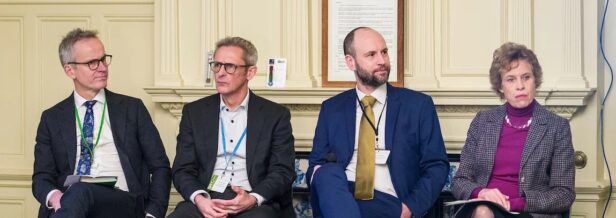
Prof Susan Jebb (far right) speaking at a panel on ‘precision breeding’ at the Oxford Farming Conference 2025, alongside UK head of Bayer, Nils Bauer, and others. Image credit: Oxford Farming Conference.
A poll by the Department for Environment, Food and Rural Affairs (DEFRA) in 2022 on public perceptions of gene-edited foods was criticised for presenting positives about GM-PBOs without addressing possible negatives. Industry voices have likewise suggested focusing on benefits rather than scientific explanations. Duncan Ribbons of the biotech company Tropic Biosciences told a 2025 Westminster Forum event on gene editing that it was hard to “educate consumers if you tackle them with science”, whereas “benefits are more easily and readily understood and accepted”.
Will the FSA, potentially partnering with the SMC, also abandon science altogether, given that risk analysis is another integral element of scientific enquiry? Or will it state categorically that the risks are equivalent to conventionally bred organisms, and should not be considered on a case-by-case basis, regardless of the extensive possible changes that could be introduced? Will they claim that PBOs are not GMOs, and if so, how will they reconcile that with legal definitions and international norms?
The FSA’s September 2025 Consumers Insights Tracker found that 16% of people had heard of “precision breeding” but only 5% knew what it meant. The gulf between people who have heard of it and those who understand it may be an important metric to track. If the SMC is tasked with raising public awareness, we may find that their priority is preventing people from seeing and debating the issues, rather than providing them with balanced information and allowing them to make up their own minds.
Leonie Nimmo is Executive Director of GM Freeze. Many thanks to Professor Wynne for his contribution.
Notes
For information on the many problems with how the UK government has deregulated newer forms of GMOs, such as removing requirements for labelling, traceability and risk assessment, see the GM Free report A disaster by design: the UK’s new rules for new GMOs.


